ARTICLES
Alcohol & Health: How Much Does It Really Affect the Body?
 Christina BalamotiClinical Dietitian–Nutritionist
Alcohol is part of many people’s lifestyle and dietary habits, most commonly in the form of wine, beer, or spirits. A question that often comes up is whether alcohol can — under certain circumstances — fit into a healthy lifestyle or whether it should be avoided altogether.
The answer is not entirely straightforward. The effects of alcohol depend on the type of drink, the amount consumed, drinking frequency, and the individual’s overall health profile.
In this article, we explore what current scientific evidence suggests about alcohol consumption, how alcohol affects metabolism and health, and under which conditions it may fit within a balanced dietary pattern.
What Does Research Suggest About Moderate Alcohol Consumption?
Ethanol — the active component of alcoholic beverages — has been extensively studied in relation to metabolic and cardiovascular health.
Population studies have associated moderate alcohol intake with improved insulin sensitivity, lower risk of type 2 diabetes, and increased HDL (“good”) cholesterol levels. Some studies have also described potential effects on blood clotting mechanisms and coronary blood flow.
These findings should not be interpreted as a recommendation to drink alcohol. However, they suggest that low alcohol consumption is not metabolically neutral and may influence specific biological pathways.
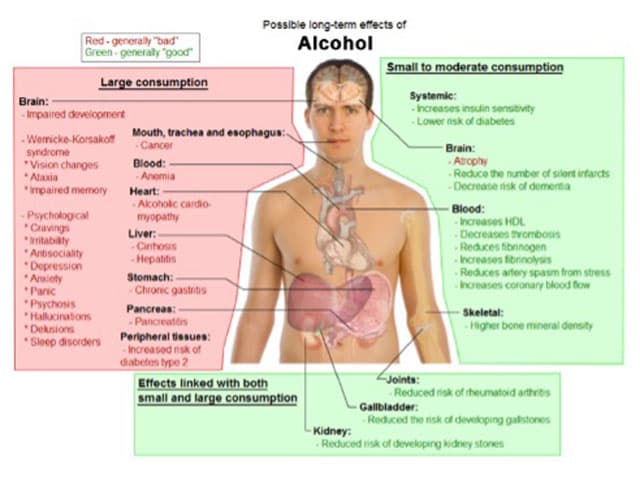
Figure 1. Potential positive and negative effects of alcohol consumption on metabolism and health.
The Metabolic and Caloric Impact of Alcohol
Ethanol provides approximately 7 kcal per gram — calories that come without meaningful nutritional value.
In practice, this means alcohol can contribute significantly to total daily energy intake, especially when consumed regularly. The higher the alcohol concentration of a beverage, the higher its caloric contribution for the same serving volume.
The table below summarizes the approximate ethanol content of common alcoholic beverages:
Beverage | Alcohol by Volume (%) | Grams of Ethanol / 1000 mL |
Beer | 4% | 30 g |
Wine | 10% | 80 g |
Liqueurs | 15–20% | 120–150 g |
Spirits | 40% | 300 g |
Even when it comes to wine, alcohol intake still requires attention. In individuals with overweight, obesity, or weight-loss goals, alcohol may negatively affect progress — not only because of its calories, but also because it is often associated with changes in eating behavior and replacement of more nutrient-dense food choices.
In moderate drinkers, alcohol may account for roughly 10% of total daily energy intake, while this percentage may increase substantially with heavier consumption.
Alcohol, Metabolism & Cancer Risk
One important issue that is often overlooked involves the metabolism of ethanol into acetaldehyde — a compound with established mutagenic and carcinogenic properties.
This becomes particularly relevant in individuals with a personal or increased risk of colorectal cancer.
Available evidence suggests that consuming around 30 g of ethanol daily is associated with a measurable increase in colorectal cancer risk, while higher intake levels appear to further increase risk — especially in men.
These findings highlight the importance of individualized recommendations regarding alcohol consumption.
Does the Type of Alcohol Matter?
Red wine differs from many other alcoholic beverages because it contains polyphenols and resveratrol. These compounds have been studied for their antioxidant and potential anticancer properties in experimental settings.
However, it is important to emphasize that these bioactive compounds do not eliminate the effects of ethanol itself.
The type of alcoholic beverage may influence the overall biological profile of alcohol consumption, but it does not transform alcohol into a “protective” food.
The Dietitian’s Perspective
In clinical practice, alcohol affects individuals differently depending on factors such as:
- body weight
- body composition
- liver function
- medication use
- overall dietary habits
For this reason, recommendations regarding alcohol intake should always be individualized.
What Does This Mean in Practice?
In individuals without contraindications and with good overall health, low alcohol intake may fit within a balanced diet without obvious adverse effects — provided that consumption remains moderate, occurs alongside meals, and takes body weight and medical history into account.
In practical terms, this usually corresponds to approximately 150 mL of wine (≈15 g ethanol), assuming there are no medical reasons to avoid alcohol completely.
balantia perspective
Alcohol is not a nutritional necessity. However, when it is consumed, its effects depend on the context, the amount, and the individual.
Understanding these factors is often more important than rigid rules or oversimplified recommendations.
Tracking alcohol intake through the balantia app may help users better understand their overall energy intake and the dietary habits that influence metabolic health.
Practical Takeaways
- Regular alcohol consumption may significantly increase total calorie intake
- Drinking alcohol with meals usually slows ethanol absorption
- Excessive alcohol intake is associated with increased metabolic and liver-related risk
- Individuals with liver disease, pancreatitis, or certain cancers should be particularly cautious
- “Safe” intake levels vary depending on the individual and their medical history
Disclaimer
This article is intended for informational purposes only and does not replace personalized advice from a qualified healthcare professional.
Frequently Asked Questions
Is there a safe amount of alcohol?
Risk depends on the amount consumed, drinking frequency, and the individual’s medical history.
Is red wine considered healthier?
Red wine contains polyphenols and resveratrol, but these compounds do not eliminate the effects of ethanol.
Does alcohol affect body weight?
Yes. Ethanol provides 7 kcal per gram and may significantly increase total energy intake.
Is it better to drink alcohol with food?
Consuming alcohol with meals usually slows ethanol absorption and may reduce abrupt metabolic effects.
References
- Costanzo S, et al. Wine, beer or spirit drinking in relation to fatal and non-fatal cardiovascular events: a meta-analysis. Eur J Epidemiol. 2011;26:833–850.
- Klatsky AL, et al. Red wine, white wine, liquor, beer, and risk for coronary artery disease hospitalization. Am J Cardiol. 1997;80:416–420.
- Pace-Asciak CR, et al. The red wine phenolics trans-resveratrol and quercetin block human platelet aggregation and eicosanoid synthesis: implications for protection against coronary heart disease. Clin Chim Acta. 1995;235:207–219.
- Rimm E, et al. Review of moderate alcohol consumption and reduced risk of coronary heart disease: is the effect due to beer, wine, or spirits. BMJ. 1996;312:731–736.
- Sohaib A, et al. Wine and cardiovascular health: a comprehensive review. Circulation. 2017;136:1434–1448.