ARTICLES
Low Vitamin B12: What Could Be Behind It?
 Christina BalamotiClinical Dietitian–Nutritionist

Vitamin B12 plays an essential role in nervous system function, red blood cell formation, and overall cellular health. Although the body only needs small amounts, absorbing B12 is far more complex than many people realize and depends heavily on the proper function of the digestive system.
In this article, we explore how vitamin B12 is absorbed, what may lead to low levels, and why deficiency is not always simply a matter of diet.
What Can Affect Vitamin B12 Levels?
Low vitamin B12 is a common finding in blood tests. While it can sometimes be linked to low intake of animal-based foods, in many cases the issue is not intake, but absorption.
For the body to properly use vitamin B12, several steps within the digestive system need to function correctly. If any part of this process is disrupted, absorption may be reduced even when dietary intake seems adequate.
Certain conditions — including stomach disorders, bariatric surgery, chronic intestinal inflammation, and chronic use of specific medications — may interfere with absorption.
Because the body stores significant amounts of vitamin B12, deficiency can develop slowly over time and may remain unnoticed for years.
How Vitamin B12 Is Absorbed
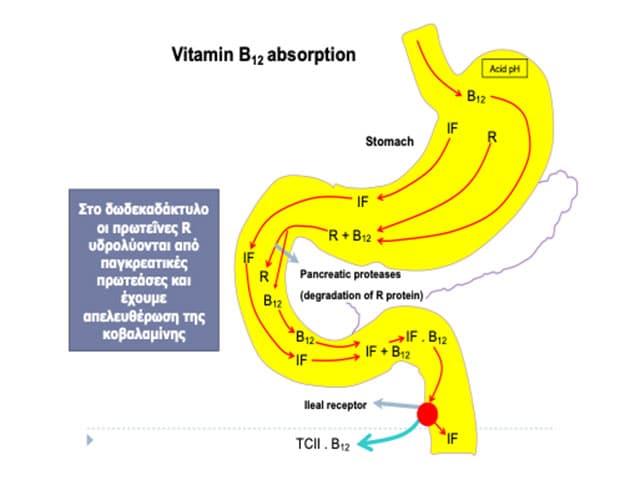
Vitamin B12 is naturally found in foods of animal origin, where it is bound to proteins. Before the body can use it, it first needs to be released in the stomach through the action of stomach acid and digestive enzymes.
The vitamin then attaches itself to specialized transport proteins that carry it safely to the small intestine. There, a protein called intrinsic factor — produced by the stomach — becomes essential for final absorption.
Once absorbed, vitamin B12 is transported through the bloodstream and stored mainly in the liver, which is why deficiency may take a long time to become apparent.
Two Common Causes of Poor Absorption
Since vitamin B12 absorption involves multiple stages, there are several points where the process can be disrupted:
1. Reduced stomach acid production
When the stomach does not produce enough acid, vitamin B12 cannot be efficiently released from food. This becomes more common with aging, stomach conditions, or after certain surgeries.
2. Low intrinsic factor production
Without intrinsic factor, vitamin B12 cannot be properly absorbed in the intestine. This may occur in autoimmune conditions, gastric damage, or after bariatric procedures.
The Dietitian’s Perspective
In clinical practice, low vitamin B12 levels are frequently seen not only in individuals who consume limited animal products, but also in people with gastrointestinal conditions or long-term medication use that affects stomach function.
For this reason, vitamin B12 levels should always be evaluated alongside the individual’s overall medical history, symptoms, and dietary pattern rather than in isolation.
What This Means in Practice
Low vitamin B12 does not automatically mean someone has a “poor” diet. In many cases, it reflects how efficiently the body absorbs and utilizes the vitamin.
Early identification can help guide dietary adjustments, appropriate supplementation when needed, and proper medical follow-up.
balantia perspective
Understanding vitamin B12 intake starts with looking at overall dietary habits. Through the balantia app, users can monitor their intake of foods that naturally contain vitamin B12 and gain a clearer picture of their eating patterns.
Consistent tracking may help identify potential nutritional gaps and provide better context when interpreting laboratory results. In this way, systematic monitoring can support a more complete nutritional assessment.
Practical Takeaways
- Low vitamin B12 is not always caused by diet alone
- Consistent monitoring may help identify deficiencies earlier
- Individuals with gastrointestinal conditions or bariatric surgery may be at increased risk
- Long-term use of certain medications can affect absorption
- Supplementation decisions should always be guided by a healthcare professional
Disclaimer
This article is intended for informational purposes only and does not replace personalized advice from a qualified healthcare professional.
Frequently Asked Questions
Does low vitamin B12 always mean poor nutrition?
No. In many cases, the issue is related to impaired absorption rather than low dietary intake alone.
Who is at higher risk of vitamin B12 deficiency?
Older adults, individuals with gastrointestinal disorders, people who have undergone bariatric surgery, and those taking certain medications.
Can vitamin B12 deficiency exist without noticeable symptoms?
Yes. Deficiency may develop gradually and sometimes becomes apparent only through blood testing.
When is vitamin B12 supplementation necessary?
This depends on blood levels, dietary intake, absorption capacity, symptoms, and medical history.
References
- Ankar A, Kumar A. Vitamin B12 Deficiency. StatPearls Publishing; 2024.
- Guéant JL, Chéry C, Oussalah A, et al. Vitamin B12 absorption and malabsorption. Vitam Horm. 2022;119:241–274.
- Mahan LK, Escott-Stump S, Raymond JL. Krause’s Food and the Nutrition Care Process. 13th ed. St. Louis, MO: Elsevier Saunders; 2012.